
Vibe Coding: Why It Matters for the Caribbean & Latin America
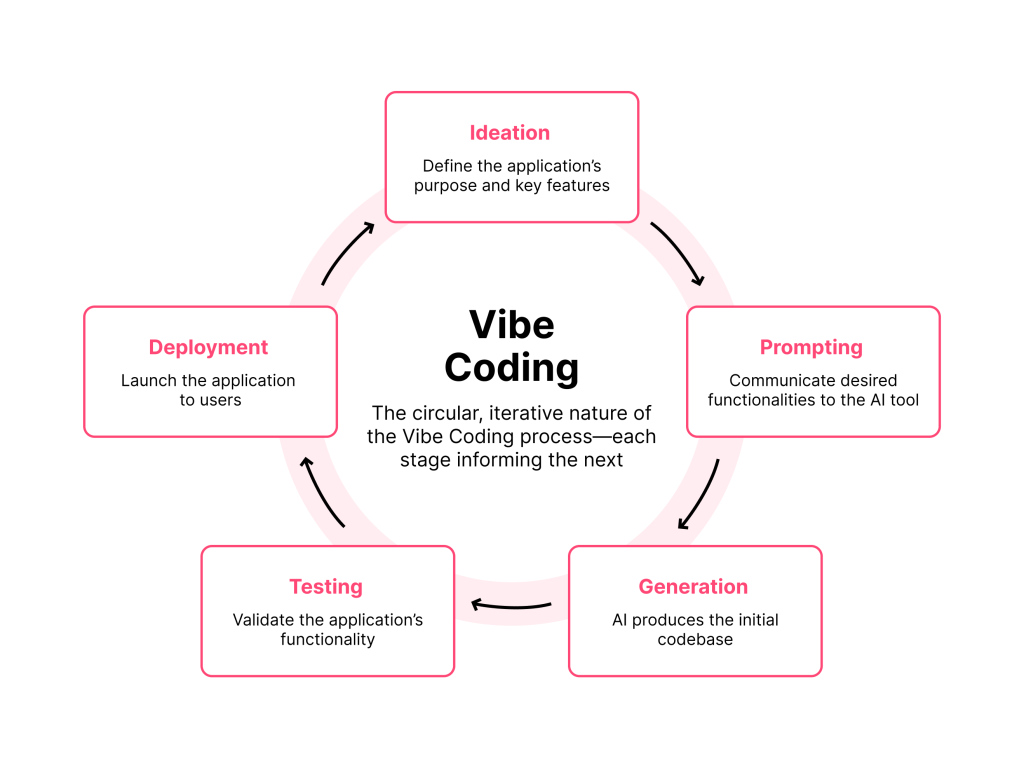
Vibe coding is emerging as one of the most talked-about shifts in software and product development. At its core, it refers to using AI to quickly turn ideas into interactive prototypes or snippets of code — fast enough for teams to “feel” the product before it’s ever fully built. Instead of relying on a lengthy PRD, a team can brainstorm with an AI tool, generate a lightweight prototype, and put it in front of stakeholders to test and refine. The point isn’t production-ready code but speed, clarity, and richer communication of product ideas.
What Vibe Coding Really Means
Globally, this shift is already visible. Some companies have experimented with including AI-assisted prototyping exercises in PM interviews — not to turn product managers into engineers, but to signal that fluency in prototyping and rapid iteration is becoming valuable across roles.
Researchers and practitioners from ACM and Google Cloud frame vibe coding as part of a larger workflow evolution. Ideas move more fluidly from conversation into code, and teams can explore what works earlier in the process.
Why Developers Still Matter
The rise of vibe coding doesn’t mean developers are being replaced. In fact, it highlights their importance. AI-generated code can often be verbose, brittle, or insecure without proper review. The healthiest model is collaboration.
Non-technical PMs, designers, or early-stage founders can use vibe coding to generate fast prototypes that communicate intent. Skilled developers then step in to review, refactor, and harden that code for production. In practice, vibe coders still need a grounding in programming basics if they want to avoid creating more cleanup work than they save. Far from sidelining engineers, vibe coding can actually expand developer impact by freeing them from repetitive scaffolding and letting them focus on building robust systems.
The Opportunity for T&T and the Wider Caribbean
For the Caribbean and Latin America, the implications are significant. Small teams across Trinidad & Tobago and the region have historically struggled with the long lead times between idea and execution. Vibe coding lowers that barrier.
- A startup could pitch investors with a clickable demo built in days rather than a PDF spec.
- A government ministry could prototype a digital service before securing full funding.
- An incubator could guide early founders through AI-assisted prototyping as a way to sharpen ideas quickly.
The opportunity isn’t only in startups and enterprises. It’s also in education. If vibe coding were introduced into secondary schools, university incubators, or community training programs, students would move beyond theory into hands-on prototyping. They would learn not just to describe ideas but to make them tangible. The process builds confidence, fosters creativity, and gives youth in T&T and the wider Caribbean skills that are already relevant in global markets.
Builders like Andel Husbands are already sharing AI-assisted prototyping experiments publicly, and these stories can inspire the next generation of regional talent.
Why It Matters
The signal here is clear: vibe coding is less about replacing traditional coding and more about accelerating communication, reducing friction, and unlocking creative momentum. For regions like ours, where resources are limited but creativity is abundant, it can become a bridge between imagination and implementation.
If vibe coding is embedded into educational pipelines early, the Caribbean and Latin America could secure a competitive edge in the global digital economy. Rather than remaining just consumers of technology, the region could emerge as contributors shaping how the next wave of software is built.